
Making Deep Survey / The Pale Interval
From a novel
to a place.
I wanted readers to encounter the world of The Pale Interval at their own pace. Deep Survey turns its places, specimens and records into an expedition: a way to look closer, follow a clue and decide where to go next.
- Project
- Deep Survey
- Work
- Worldbuilding, interaction & development
- Built with
- React, Three.js & React Three Fiber
01 / The world
Give the fiction a surface.
The survey begins in orbit. Planets, a star, a ring structure and a salvage field each have their own material and form. Veyrath has a dedicated surface shader, built from colour, relief and region maps. Changing the scan changes what that surface reveals.
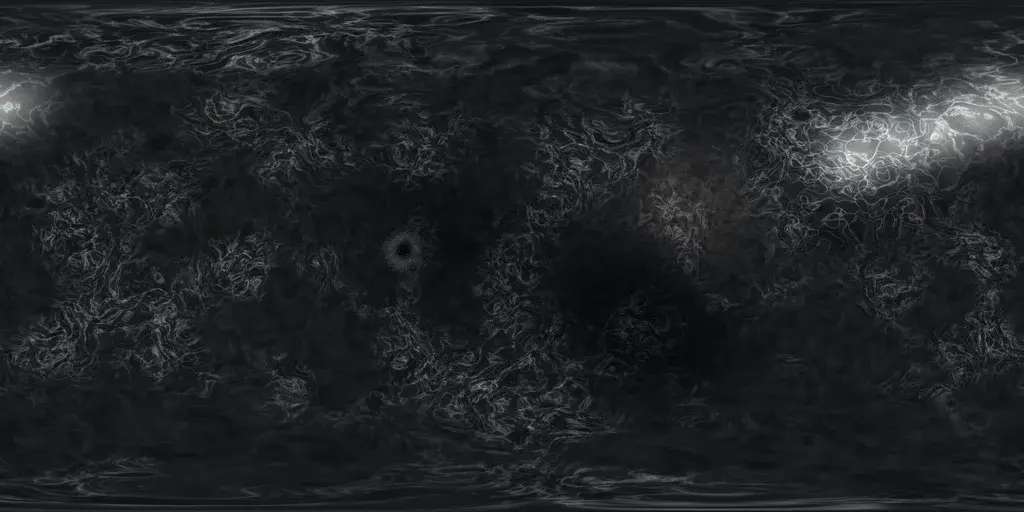

These are source textures used by the live survey. Lighting and scan materials turn the flat maps into a world you can move around.
02 / The instruments
Looking becomes a way in.
Each instrument has a purpose. A mineral scan reads a planet differently from a thermal scan; a ring structure calls for a structural scan. Scanning the right location in the right mode recovers a record, connecting a place to something you can inspect.
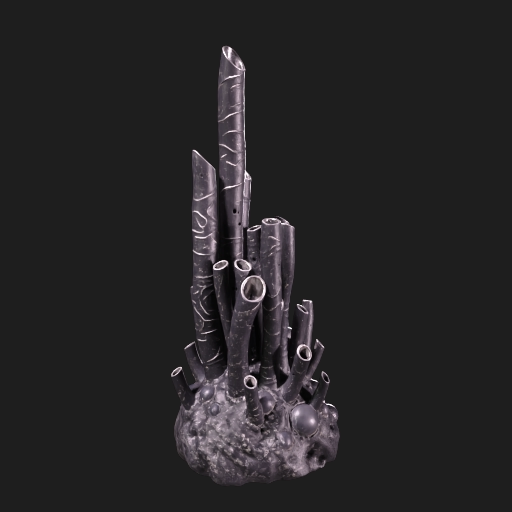
Recovered models can be turned and examined. Selected specimens also respond to wet, sun and dark conditions, following the behaviour described in the worldbuilding. Harmonic Tubes hold traces of pressure; their response is resonance.
Read the specimen record ↗03 / The pace
Leave room to return.
Discoveries and the last survey position are saved in the browser when storage is available. You can leave and pick up the trail later. Records that reveal the novel’s plot ask before opening; finding them does not mean you have to read them.
The field guide draws from the same worlds and records. It offers a quieter route through the material, with ordinary links, images and text. Reduced motion, keyboard controls and recoverable 3D loading states keep the experience usable at different paces and on different devices.