ChaptersIntroduction
An investigation across thirty years of platforms
Nosaferooms.
A document-based investigation into how public reach, private contact, recording, recommendation, and payment can combine to expose young people to recurring forms of online exploitation.
The recurring architecture of online exploitation
The platforms change. The dangerous connections between their features keep returning.
Read the source trail →The early social web promised rooms: places to arrive under a screen name, talk to strangers, and leave. Later platforms added cameras, ranked feeds, virtual gifts, direct messages, and subscription links. Each feature solved a product problem. In combination, some created a repeatable path from public discovery to private pressure and permanent capture.
The scale is often described with CyberTipline numbers. Those figures require discipline. The 2000 category counts in a United States government report sum to 19,245. NCMEC received 20.5 million reports in 2024, representing 29.2 million reported incidents after bundled files were counted. The reporting system, legal duties, platform practices, and categories changed across that span, so the comparison is a record of reporting volume—not a prevalence curve and not a count of children.12
This investigation therefore makes a narrower argument. The documentary record repeatedly shows risk where a product combines youth visibility, unverified or weakly verified contact, migration to private channels, durable media, and money. No single feature proves abuse. Their interaction is the design problem.
- reports
- reporting duties
- not prevalence
Chapter 01 2024
Learning what the room can hide
Reports measure submissions—not unique victims or confirmed offences.
Online grooming does not follow one script. NCMEC describes offenders using compliments, shared interests, gifts, deception, threats, and rapid demands; financial sextortion may accelerate after an image is obtained. The important design fact is not that every exchange begins ominously. It is that ordinary conversation can cross into coercion without a clear boundary in the interface.53
Anonymity can protect exploration, privacy, and vulnerable communities. The same uncertainty can also conceal age and intent. The tension is not resolved by declaring anonymity either virtuous or dangerous. A safer product has to decide what strangers can discover, what they can request, how contact becomes private, and what friction appears before harm—not after a report.
NCMEC reported approximately 1.4 million online-enticement reports in 2025. That total reflects reports submitted under a category whose legal and operational context has expanded; it is not a count of unique offenders or victims. It is still a strong signal that private-contact risk cannot be treated as an edge case.3
Next: The public room and the private exit
- free chat
- 28 countries
- partial closure
Chapter 02 September 2003
The public room and the private exit
One documented response closed some rooms while other chat services remained.
The enforcement record predates the modern feed. The FBI opened Operation Innocent Images in September 1994 after a missing-child investigation exposed online trading and contact through private bulletin boards. A nationwide enforcement action followed in 1995. The chronology matters: investigators were documenting online exploitation while mass-market social spaces were still taking shape.6
In September 2003, Microsoft announced that free MSN chat rooms would close in 28 countries while subscription chat remained in some markets. This was not the end of online chat, nor proof of one corporate motive. It was an early acknowledgement that an open room, direct stranger contact, and limited supervision could not be separated from product responsibility.7
By 2009, Connecticut’s attorney general said MySpace had identified about 90,000 registered sex offenders with profiles. That is a profile count, not evidence that each person offended through the service. It nevertheless shows the scale of the identity and access problem that platforms and regulators were trying to manage.8
Next: When the audience talks back
- random pairing
- reports
- settlement
Chapter 03 2022
When the audience talks back
Provider totals reflect reporting practices as well as detected harm.
Webcam platforms changed the room from text to performance. A public broadcast, a live request channel, and a private follow-up route could turn attention into pressure. The risk is documented in individual prosecutions, not in a claim that every viewer or platform followed the same path. In one federal case, Lucas Michael Chansler pleaded guilty to a scheme that ran from 2007 to 2010; the FBI later connected his conduct to contact made through Stickam.910
“Self-generated” is an investigative category, not a statement of consent or blame. IWF warns that imagery made with a child’s own device may involve grooming, coercion, or pressure. Its 2024–25 report says 91 percent of criminal reports it assessed contained self-generated imagery. That percentage describes IWF’s assessed reports, not all material online.1112
Omegle later reduced stranger contact to random pairing with no account required. NCMEC recorded 608,601 CyberTipline reports from the service in 2022. Provider totals reflect different detection and reporting practices, so that number is neither a count of unique victims nor a ranking of platform danger. It does show the scale of the reporting record around one camera-and-chat product.4
Next: Money enters the interaction
- gifts
- payment
- distinct systems
Chapter 04 Documented examples
Money enters the interaction
Gifts can reward a viewer’s request; they do not prove one universal lifecycle.
Mobile livestreaming made attention spendable. Virtual gifts can be legitimate participation, but they also let a viewer attach money to a request in real time. In 2017, Periscope said it had suspended more than 36,000 accounts for inappropriate interaction with children. Its later closure notice cited declining use and rising maintenance costs—not a single safety cause.1314
The Musical.ly record shows a different failure. A 2019 federal complaint alleged that the app collected children’s personal information without required parental consent, kept profiles searchable, and enabled direct messages by default. Musical.ly settled the COPPA allegations for $5.7 million, then the largest civil penalty in a children’s privacy case. The complaint concerns privacy and data practices; it is not a finding that every interaction was exploitative.1617
Payment changes the stakes because it can reward escalation while the platform takes a share of the transaction. That does not make all gifting abusive. It does mean safety teams must evaluate the complete interaction: who is visible, who can pay, what requests can accompany payment, and whether the recipient can leave without financial pressure.
Next: The archive that never closes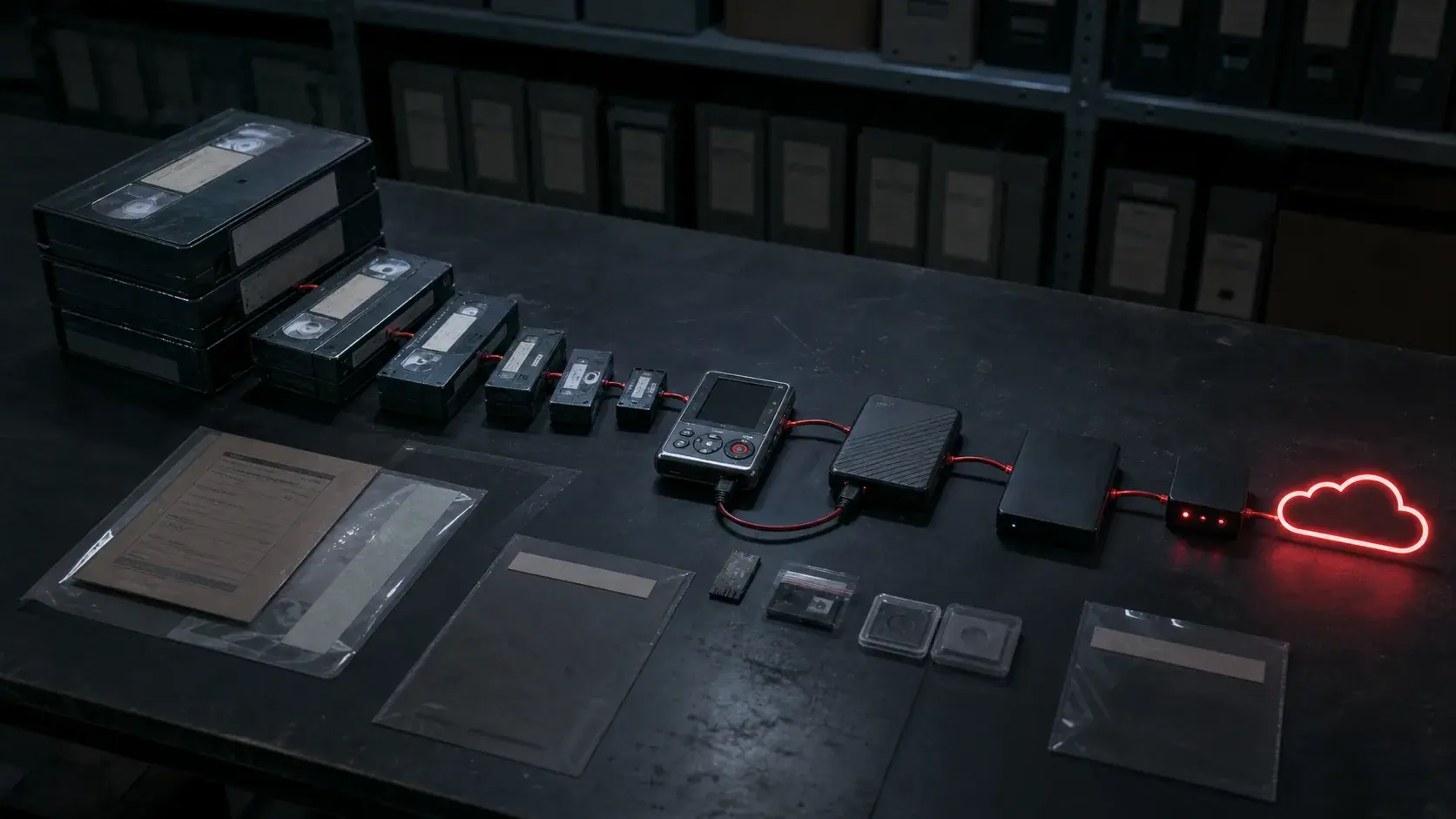
- capture
- copies
- recirculation
Chapter 05 2025 reporting
The archive that never closes
One victim’s imagery appeared 1.4M times in submissions over twenty years.
Communities built around sexualized images of minors did not begin in hidden networks. Reddit’s own policy history is instructive. On February 12, 2012, the company announced a ban on content that sexualized minors. The original announcement establishes that date without requiring a later event to explain it.15
Platform closure and content removal cannot retrieve every copy already made. This investigation therefore does not name current communities, reproduce discoverability terms, or direct readers towards offending material. That is an editorial safety decision, not a claim about the archive economy’s size or location.
An archive economy survives by copying, indexing, and recirculating. NCMEC notes that the same material can be submitted repeatedly; one victim’s imagery was reported 1.4 million times over twenty years. That example is not a population statistic. It makes the persistence problem concrete: repeated circulation can keep renewing harm long after the original capture.3
Next: Safety claims meet the live product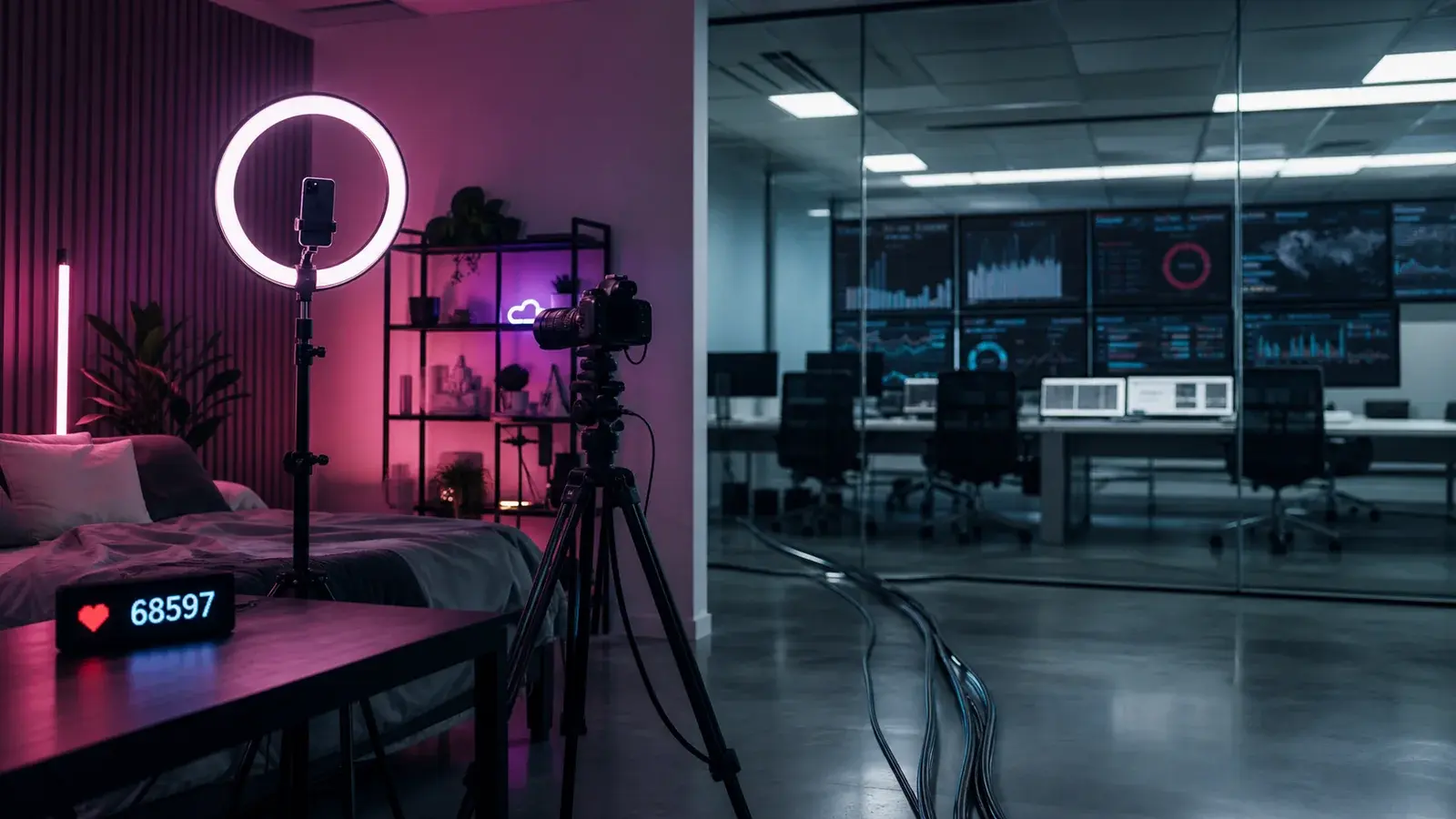
- age policy
- gift rail
- complaint record
Chapter 06 Utah complaint / Jan. 2022
Safety claims meet the live product
Utah alleges that safeguards and business incentives failed together.
TikTok states that a person must be at least 18 to host LIVE or send and receive Gifts. A less-redacted Utah complaint filed in January 2025 describes a different historical record: state investigators alleged that internal January 2022 data classified 112,000 LIVE hosts as ages 13 to 15. These are allegations in a state complaint, not judicial findings.1819
The complaint separately alleges that TikTok recorded one million Gifts in January 2022. The underage-host figure and gift figure should not be fused into a claim that every gift went to a minor. Their coexistence instead raises a product-governance question: what controls operate when age assurance, distribution, and payments share one surface?19
A current policy page can describe an age floor; a complaint can allege that the floor was bypassed in an earlier period. The policy is a self-description, not TikTok’s response to the historical allegations, and neither record alone tells the whole story. Product language calls this a gap between stated rule, observed state, and control. In youth safety, that gap is also where accountability begins.1819
Next: Brazil makes the reporting visible
Chapter 07 Brazil / 2025—26
Brazil makes the reporting visible
Reporting volume rose during public attention; the record does not make risk inevitable.
Brazil’s 2025 debate made a hidden reporting system unusually visible. SaferNet Brasil recorded 76,997 anonymous reports across its hotline from January through July; 49,336 concerned child sexual abuse and exploitation, or 64 percent. These are submitted reports, not verified incidents or unique victims.20
After Felca published “Adultização” on August 6, SaferNet counted 1,651 unique reports from August 6–12, compared with 770 during the same dates in 2024—a 114 percent increase. The comparison is year over year, not against the preceding week, and it measures reporting activity rather than a sudden doubling of abuse.21
Brazil enacted Law 15,211, the ECA Digital, on September 17, 2025; it entered into force six months later on March 17, 2026. Article 23 prohibits monetization and paid amplification of content that portrays minors in eroticized or sexually suggestive contexts; Article 6 separately addresses recommendation-related risks. The law is a regulatory framework, not evidence that enforcement became complete the day it took effect.2223
Next: Economic pressure is not consent
Chapter 08 Ukraine / Colombia
Economic pressure is not consent
Separate records show pressures; neither establishes a worker’s path.
Economic precarity appears in this story, but it cannot be used as a shortcut to a single biography. IOM estimated 5.4 million internally displaced people in Ukraine on January 23, 2023. UN Women later reported that, among displaced people in 2024, 48 percent of women and 71 percent of men were employed. Those figures document unequal pressure; they do not establish who entered any particular platform or why.2425
Adult consensual digital work and child exploitation are not interchangeable categories. They can share technical infrastructure—cameras, platforms, payment processors—while involving fundamentally different questions of age, agency, labour protection, and coercion. Collapsing them obscures both child safety and adult workers’ rights.
Human Rights Watch interviewed 50 adult webcam workers in Colombia and documented specific studio abuses, including deductions, surveillance, and pressure, while also distinguishing voluntary entry from abusive conditions. The relevant lesson is not that one economic condition produces one inevitable choice. It is that platform and studio design can redistribute power, information, and risk away from workers.26
Next: A pipeline is not a biography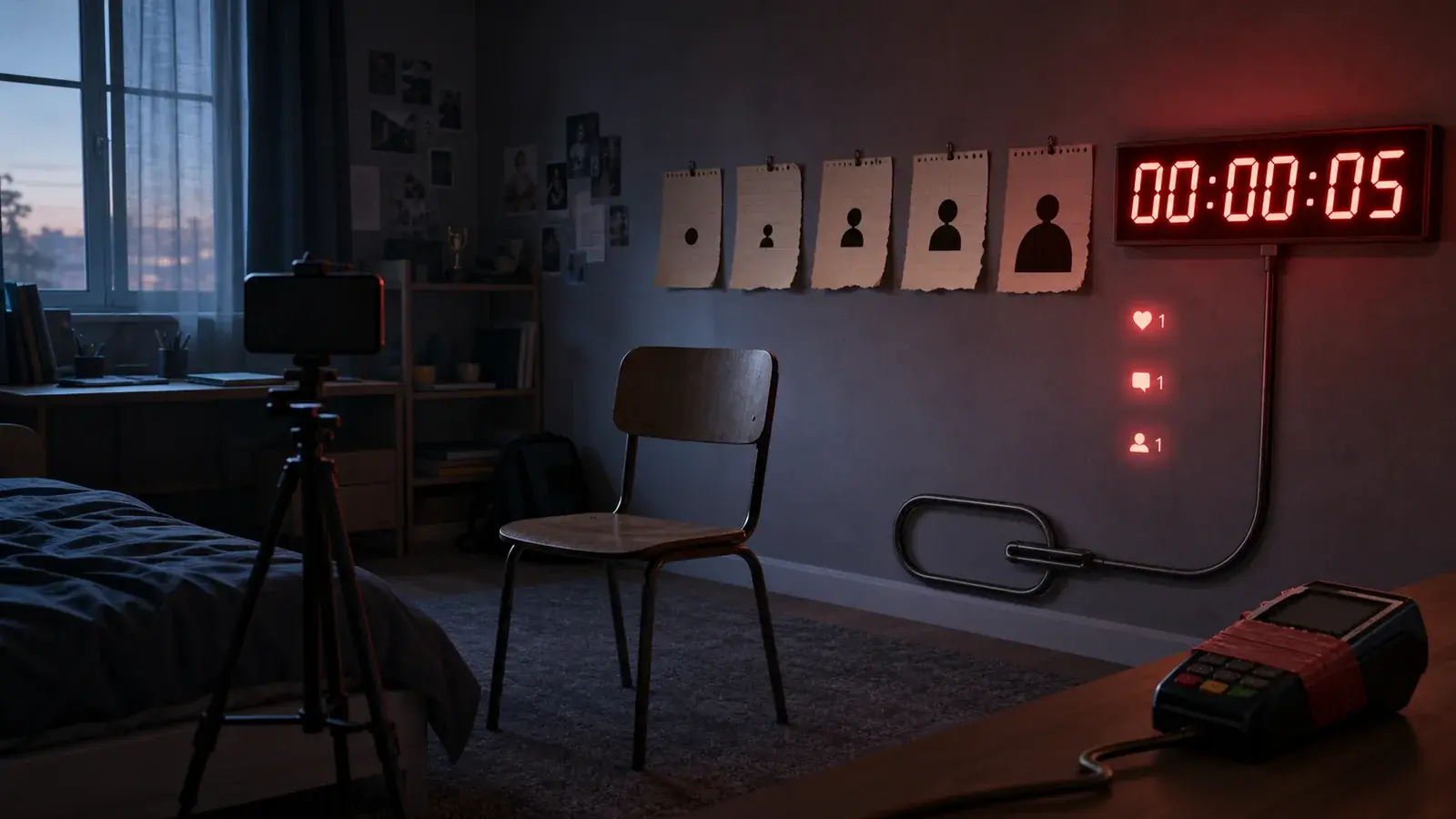
- contact defaults
- LIVE gifting
- age-control gaps
Chapter 09 Separate records
A pipeline is not a biography
A diagram can connect risks. It cannot invent the person moving through them.
These records do not establish one continuous biography from a childhood livestream into adult subscription work. Separate incidents do not add up to a person. A feed, a gift rail, an external link, and a subscription page may form adjacent stages in a system; they do not make any individual life inevitable.
Fenix International’s filed accounts for the year ending November 30, 2023 report approximately $6.6 billion in gross payments, 4,118,000 creator accounts, and 305,066,000 fan accounts. Accounts are not necessarily unique or active people. The filing describes the scale of an adult platform, not a childhood-to-adulthood conversion rate.27
X permits consensual adult content when it is properly labelled and kept away from prominent surfaces; it prohibits sexual content involving minors. That makes X a possible promotional channel, not proof of a universal funnel. The defensible design question is narrower: how effectively do age boundaries and off-platform transitions interrupt discovery across services with different rules?28
Next: Distribution outruns context
Chapter 10 2022—2025
Distribution outruns context
Distribution can outrun context; reach, intent and safeguards remain separate.
Short-form video separates a fragment from the context in which it was made. Music, choreography, commentary, and advertising can travel as reusable sounds. That does not make the artist responsible for every audience or use. It makes distribution design responsible for deciding which users receive which version, with what context, and under what age settings.
TikTok says its Content Levels system can restrict mature themes from users ages 13 to 17 and assign content maturity scores. This is a statement of product policy, not independent proof of perfect classification. It nevertheless shows that the platform itself recognizes that age and context belong inside recommendation decisions.29
A TikTok-commissioned Luminate report found an association between TikTok engagement and music discovery and chart performance. Because the work was commissioned by the platform and measures association, it cannot prove that one service causes every hit. It does establish the commercial importance of a distribution layer whose clips can travel farther than the original release context.30
Next: Accountability is not shame
- reporting
- generation
- verification
Chapter 11 2025
Accountability is not shame
Reports identify scale; they are not unique victims or findings.
Accountability should focus on who controls discovery, contact, recording, recommendation, and payment—and on who has the least power to stop what follows. Reducing stigma around consensual adult work does not require abandoning scrutiny of pressure, distribution, profit, or weak safeguards.
The July 13, 2022 order in A.M. v. Omegle was a motion-to-dismiss ruling. The court accepted complaint allegations as true for that procedural stage and allowed some product-design and warning claims to proceed despite a Section 230 defense; it did not enter a verdict on liability or causation. Counsel for the plaintiff later said permanent shutdown was a 2023 settlement term.3132
Generative AI raises another accountability problem. NCMEC reported more than 400,000 CyberTipline reports with a generative-AI nexus in 2025, including more than 182,000 concerning possession, generation, or attempted generation of AI child sexual abuse material. These are report categories, not unique victims or images. The figures show why provenance, consent, and rapid removal now matter even when a depiction is fabricated.3
Next: What the record asks us to design
- contact
- payment
- intermediary
Chapter 12 1998—2026
What the record asks us to design
Thirty years make recurrence foreseeable, not inevitable in every system.
The safety infrastructure is older than the latest crisis. CyberTipline began in 1998, and Microsoft donated PhotoDNA technology to NCMEC in 2009. Since then, reporting duties, hash matching, age assurance, and removal systems have expanded. The accurate history is one of uneven adoption and enforcement—not thirty years without tools.333
Recent laws address different parts of the system. The U.S. REPORT Act became law on May 7, 2024. TAKE IT DOWN became law on May 19, 2025, with the FTC beginning enforcement of its platform duties a year later. Ofcom began enforcing major UK child-protection duties on July 25, 2025. Brazil’s ECA Digital entered into force on March 17, 2026. None is a single global solution.34353623
The argument that survives the evidence is a design goal: break the chain before public reach becomes private pressure and before pressure becomes a permanent, monetized record. Measure the joins between features, test whether age controls survive real use, remove financial incentives for coercion, and make responsibility legible across services. The room is not made safe by its name. Safety has to be built into every exit.
Read the source trail